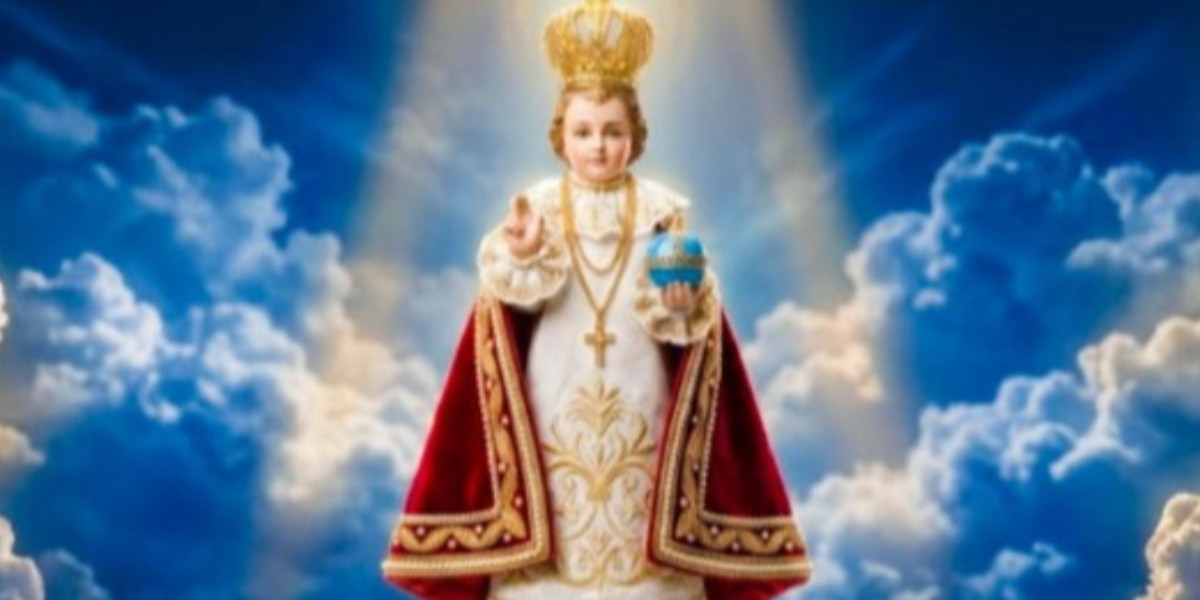
In the heart of the Czech Republic stands a small, 19-inch statue of the Child Jesus that has survived wars, looting, and the passage of centuries. Known worldwide as the Infant Jesus of Prague, this revered image draws millions of pilgrims each year. Today, it is enshrined in the Church of Our Lady of Victory in Prague. Yet the story of this beloved statue begins in 16th century Spain, where tradition traces its origins.
The Spanish Origins
The history of the Infant Jesus of Prague begins in 16th-century Spain. According to tradition, a holy priest experienced a vision of the Child Jesus, and the statue was later created based on that vision.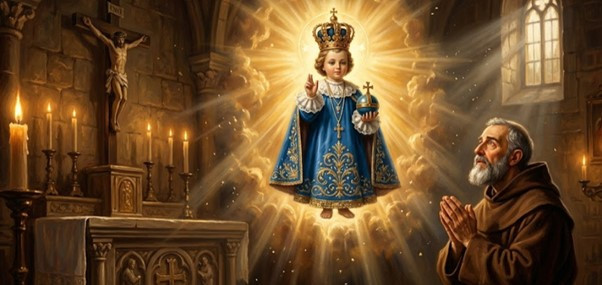
The statue is a small, wax-coated wooden figure of the Child Jesus, measuring about 48 cm (19 inches) in height. It depicts Jesus as a young King, wearing royal robes and a crown. In His left hand, He holds a globe topped with a cross, symbolizing His sovereignty over the world, while His right hand is raised in blessing.
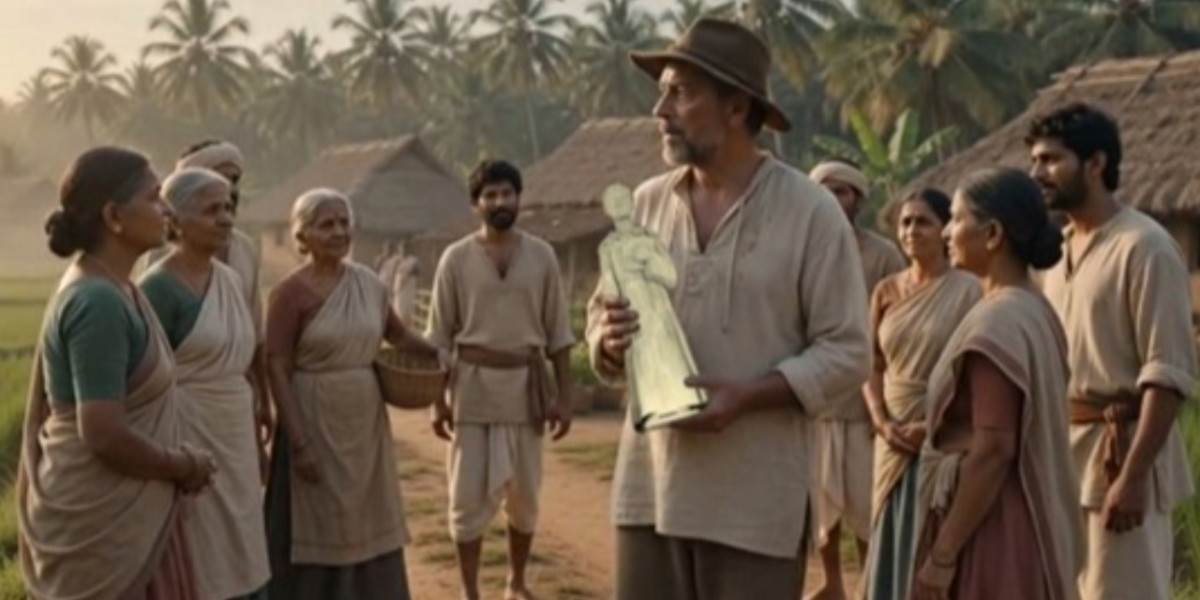
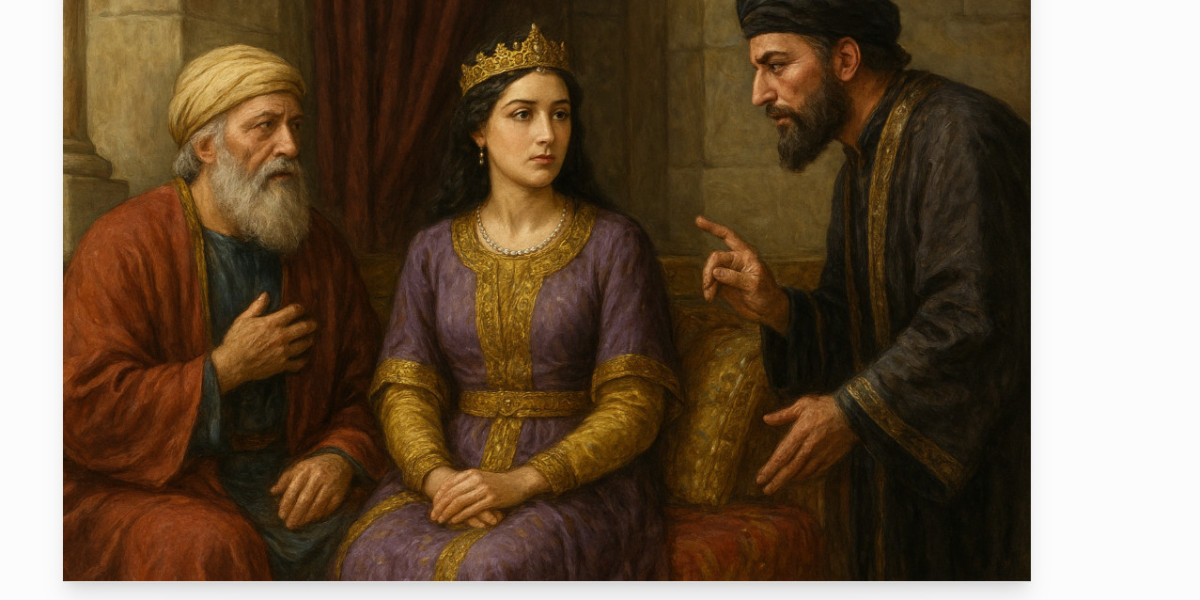
Another long-standing tradition says that the Spanish noblewoman María Manrique de Lara received the statue as a wedding gift from her mother, Doña Isabella of Manrique, when she married the Bohemian nobleman Vratislav II of Pernštejn in 1556. When María moved from Spain to her new home in Prague, Bohemia (now part of the Czech Republic), she brought the treasured statue with her.
María later gave the precious statue to her daughter, Polyxena of Lobkowicz, who shared her mother's deep devotion to the Child Jesus. In 1628, Polyxena donated the statue to the Discalced Carmelites at the Church of Our Lady Victorious in Prague.
According to Carmelite tradition, she presented the statue to the friars with these words: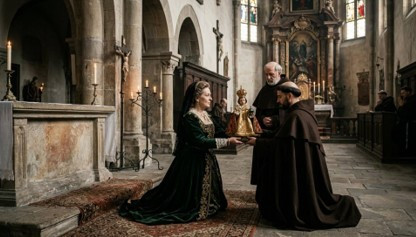
"I give you what I prize most highly in the world. Honor this image, and you shall never be in want."
The Carmelites gratefully accepted the gift and placed the statue in their oratory, where it soon became an important focus of their prayer and devotion.
War and Rediscovery
Soon afterwards, the Thirty Years' War brought violence to Prague. In 1631, the Carmelite friars were forced to leave the city when Saxon forces occupied Prague and the church was looted. During the attack, the statue was thrown behind the main altar. Its hands were broken, and it remained forgotten for several years.
Around 1637, the Carmelite priest Father Cyril of the Mother of God returned to the church and rediscovered the damaged statue. He carefully cleaned it and placed it once again in the oratory, even though its hands were still missing.
According to Carmelite tradition, while praying before the broken statue, Father Cyril experienced what he believed was the voice of the Child Jesus, saying:
"Have mercy on Me, and I will have mercy on you. Give Me My hands, and I will give you peace. The more you honour Me, the more I will bless you."
The First Refusal
When Father Cyril told his Superior what had happened in the chapel and that the Infant Jesus had asked for His hands to be restored, the Superior refused to spend money repairing the damaged statue. The monastery in Prague was suffering severe poverty following the devastation of the Thirty Years' War, and the Superior believed that restoring the broken image was beyond their means.
The Dying Man's Gift
One day, Father Cyril was called to the bedside of a wealthy and devout gentleman who was nearing death. Moved by faith, the dying man generously donated a sum of money specifically to restore the broken hands of the monastery's beloved Infant Jesus statue.
Father Cyril gratefully presented the donation to his Superior. However, believing it would be wiser to begin anew, the Superior refused to use the money to repair the damaged statue. Instead, he used the donation to purchase a brand-new statue of the Infant Jesus.
Divine Displeasure and the Plague
According to tradition, the new statue was placed on display. But that very day, a heavy candelabrum, securely fixed to the wall, suddenly broke loose and crashed directly onto the new statue, shattering it into pieces.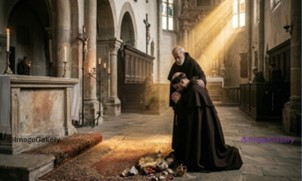 Shortly afterward, the Superior's term ended, and a new Superior was elected.
Father Cyril once again pleaded for permission to repair the original broken statue, but the new Superior also refused because the monastery remained in poverty. Soon afterward, a devastating plague swept through Prague and reached the monastery, leaving the new Superior dangerously ill. Recognizing the community's neglect of the original image, he repented and vowed to honour the Infant Jesus if he recovered. According to tradition, he was miraculously cured almost immediately.
The Mysterious Noblewoman
Although the Superior had recovered, the monastery remained desperately poor. He could spare only a small amount of money for the repairs, far too little to pay a skilled craftsman. Heartbroken but steadfast in faith, Father Cyril wept and prayed before the broken image. Suddenly, he heard a divine voice for the second time, saying,
“Place Me near the entrance to the sacristy, and you will receive aid.” Father Cyril immediately obeyed.
According to tradition, a wealthy noblewoman approached Father Cyril and placed a heavy leather purse filled with gold coins into his hands for the restoration of the Infant Jesus. But as he looked up to thank her, she had vanished. Rushing outside, Father Cyril questioned the guards and the townspeople, but no one had seen the mysterious lady enter or leave the church. She had disappeared without a trace.
The Imperfect Fix and the Angelic Craftsman
A well-known sculptor was then hired to restore the statue. However, despite his skill, the restoration was unsuccessful. The newly crafted hands did not match the beauty of the original image, leaving Father Cyril deeply disappointed.
According to tradition, sometime later, a mysterious young sculptor arrived at the monastery. With Father Cyril's permission, he carefully crafted beautiful new hands that perfectly matched the statue. When Father Cyril and the monks returned with the payment they had set aside for him, the young sculptor had disappeared. They searched the monastery and questioned the townspeople, but no one had seen him leave. According to tradition, many believed that God Himself had sent the mysterious craftsman to complete the restoration of the Infant Jesus.
Miracles and Growing Devotion
After the statue was restored, devotion to the Infant Jesus of Prague spread rapidly. Many people reported receiving favours through the Child Jesus' intercession, including healings, protection during times of war, and answers to prayer.
These reported miracles attracted pilgrims from across Europe and later from around the world. While the Church recognizes the long history of this devotion, individual miracle accounts are generally regarded as testimonies of the faithful rather than documented historical events.
The Coronation
On 4 April 1655, the statue was solemnly crowned in Prague by Bishop Josef Corta on behalf of Cardinal Harrach, recognizing the kingship of the Child Jesus. The golden crown, adorned with precious stones and pearls and topped with a small cross, symbolizes Christ's kingship over all creation and His victory over sin and death.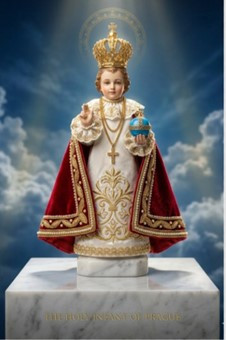
To commemorate this event, a special celebration continues to be held each year on the first Sunday of May in Prague.
The Infant Jesus Today
Today, the original statue remains in the Church of Our Lady Victorious, where thousands of pilgrims visit each year to pray before it. The statue is dressed in richly embroidered robes that are changed according to the Church's liturgical seasons and major feast days.
In 2009, when Pope Benedict XVI visited Prague, he presented a beautiful golden crown to the Infant Jesus. This crown is now used on special occasions.
Today, believers around the world continue to cherish the traditional promise associated with this devotion:
"The more you honour Me, the more I will bless you."
Sources: Catholic Church tradition, historical records, and long-standing devotional traditions passed down through generations.