
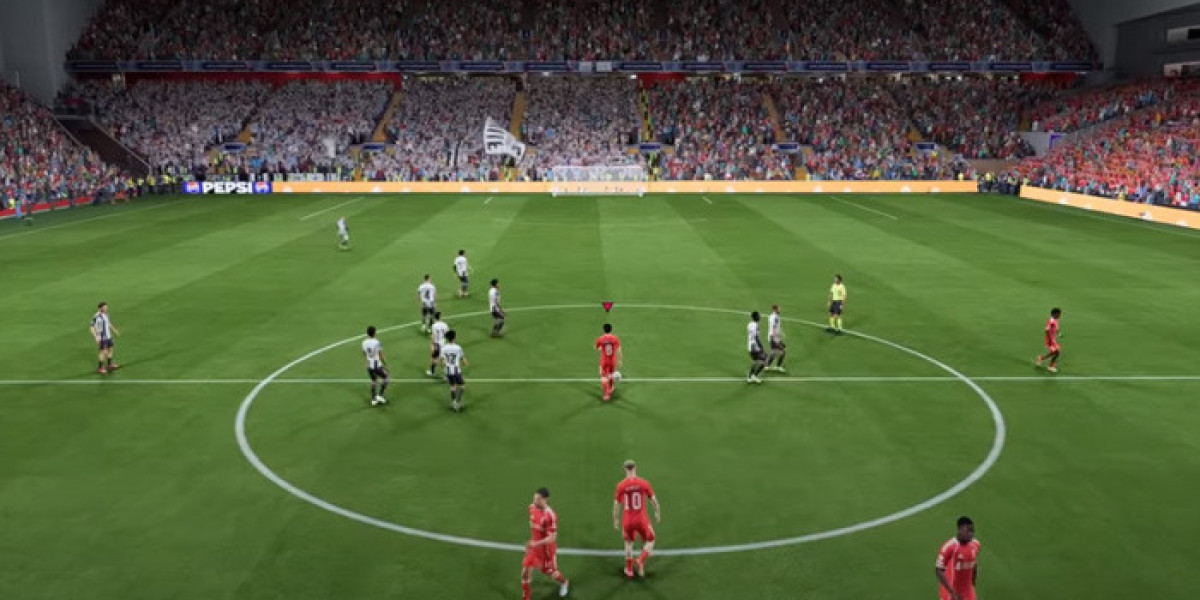
The 4‑4‑1‑1 used by Anders Vergang in FC 26 has quickly become one of the most talked‑about systems in the competitive scene, and understanding it can be more valuable than any quick decision to buy fc 26 coins for short‑term upgrades. His approach shows how much can be gained from smart tactics, clear roles, and a deep understanding of how to create and exploit space rather than simply relying on higher‑rated players.
At the heart of this setup is the central attacking midfielder, used in a playmaker role rather than as a pure goal‑scoring shadow striker. Instead of constantly running beyond the striker, the playmaker stays central, connects the lines, and becomes the hub for first‑time through balls, which are extremely strong in FC 26’s current gameplay. This calm, central positioning makes it easier to recycle possession, thread passes at the right moment, and keep the entire attack synchronized.
The lone striker is not asked to do everything alone either. In Anders’ variation, the striker is built as a classic advanced forward, constantly threatening the back line and giving the playmaker a clear target for those OP through balls. That direct threat forces defenders to drop off, opening extra pockets for the CAM and wingers to exploit, which is a big reason this system scores heavily without feeling chaotic.
Wide players are used in a very aggressive way. By choosing winger‑like profiles on the flanks and often instructing them to behave more like inside forwards, Anders ensures that his team always has runners attacking the box from both sides. This has two major benefits: it stretches defenses horizontally and guarantees options for cutbacks or driven crosses, which are still vital ways of scoring in FC 26.
Central midfield, however, is where this 4‑4‑1‑1 becomes truly “broken” in the hands of a skilled player. Instead of a deep playmaker next to a box‑to‑box runner, Anders uses two box‑to‑box midfielders with a strong ball‑winning focus. This double engine in the middle allows him to press higher, recover quickly after losing possession, and keep the opponent locked in their own half, which synergizes perfectly with his high defensive line.
The back four is deliberately simple. Fullbacks are set to defend first, staying in line with the center‑backs instead of constantly overlapping, which keeps the defensive structure stable when the midfield pushes up to win the ball. With a balanced goalkeeper behind them, the team maintains enough security to survive counters even when pressing with numbers.
Tactically, Anders often uses relatively high depth, sometimes going as far as extreme values in certain game states, because he trusts his midfielders to win second balls and his front four to convert the turnovers. For most players, a slightly more moderate depth such as around the mid‑range still captures the spirit of his approach without exposing the back line too much. What matters most is committing to an assertive, front‑foot mentality rather than sitting back and hoping for mistakes.
In possession, short passing plays a key role. Despite some community skepticism, short passing combined with manual run triggers and smart timing of player runs proves extremely strong, particularly when triggering fullback and winger movement in sync. The 4‑4‑1‑1 layout provides predictable triangles all over the pitch, which makes this style of play consistent and hard for opponents to read.
For players trying to improve, the main lesson from Anders Vergang’s 4‑4‑1‑1 is that roles and instructions matter more than just copying a formation shape. Using a central playmaker CAM, two energetic ball‑winning box‑to‑box CMs, and disciplined fullbacks creates a stable framework that rewards good decisions and smart timing. Rather than chasing constant formation changes, mastering this kind of clearly defined system can be the fastest way to climb divisions in FC 26.
Read more: Best FC 26 Formation Right Now: 4411 vs 451 – Which One Truly Dominates?